Courage
Each of the great Baroque paintings in the Church of the Infant Jesus of Prague depicts the story of different biblical figures and saints of the Order of the Discalced Carmelites. In every painting, a different kind of courage is hidden — one that can still inspire us today.
The Ecstasy of Saint Teresa (Johann Georg Dietrich, 1752)
Teresa of Ávila (1515–1582) was a Spanish mystic and, together with John of the Cross, a reformer of the Carmelite Order. She authored many texts describing her experiences of prayer and contemplation. This painting captures one of her inner experiences: a mystical vision, an encounter with God’s love as a fiery arrow that pierced her completely and transformed her forever. Teresa was canonized in 1622 and remains an example of trust and deeply lived love for God and for people.
Try, for a moment, to forget the ordinary day and your worries, and realize that you too are loved.
Saint John of the Cross (Matěj Zimprecht, 1669)
John of the Cross (1542–1591) was a Spanish Carmelite, poet, and, together with Teresa of Ávila, a reformer of the Carmelite Order. His own fellow brothers imprisoned him in a monastery in Toledo, where he spent eight months. Here, the painter depicts him in a moment of glorification: in the light and glory that came after years of struggle. The inspiration for this painting may also have been the final words John spoke shortly before his death: “Now I go to sing in heaven.” He was canonized in 1726.
John taught that freedom can be carried within us. What holds us back on the path to freedom is the binding desire to hold on to everything, to control, manage, and achieve everything by our own effort.
Try closing your eyes for a moment and imagine that you do not have to perform or achieve anything — that you may simply be.
Simon Stock Receiving the Scapular from the Virgin Mary (Petr Brandl, 1720)
Simon Stock (1164–1265) was a medieval Carmelite monk and English hermit. The painting depicts one of his visions: receiving from the Virgin Mary the gift of a small piece of cloth called a scapular, as a sign of God’s protection and love — an eternal covenant between God and humanity. Receiving a gift requires courage. We must admit that we are not enough on our own, that we need others.
Recall a moment when you yourself received a gift.
The Intercession of the Virgin Mary (Antonín Stevens of Steinfels, 1641)
This painting depicts the Battle of White Mountain (1620) between the imperial army and the forces of the Bohemian estates. In the lower left corner we see Emperor Ferdinand II kneeling with his son; on the right stands the Carmelite monk Dominic of Jesus and Mary. Above them, the Virgin Mary and a multitude of saints intercede for the victory of the imperial forces. This scene from Czech history may remind us that our own lives are also filled with conflicts and battles — some won, some lost. From this position, we can only view the painting with difficulty: we cannot fully see the whole or grasp the proper perspective. In the same way, in our own lives we are often able to look objectively at difficult situations only once we step back from them. Perhaps only after some time has passed.
Try stepping farther away to take in the full view of this painting — perhaps even back into the main space of the church. In the same way, you may look at your own life situations, your own battles: with distance, seeing the whole picture, perhaps when the right time comes.
The Death of Saint Joseph (Petr Brandl, 1720)
Joseph was a carpenter from Nazareth — the husband of Mary and the earthly father of Jesus. The Bible says little about him, and he himself speaks no words there. Yet what we do know is that he trusted God and seemed to say yes to all that came into his life; he lived in the PRESENT. Brandl portrays him at the moment of death, surrounded by those he loved. The painting reminds us that earthly things come to an end: our health, our activity, our relationships, and ultimately our lives. Coming to terms with mortality is not easy. Yet if we accept our finitude, it may teach us to appreciate every moment and every detail of our lives.
Take a moment to become aware of this present moment, of the place where you are standing right now. Simply be for a while and notice this moment. It will never come again.
The Statue of the Infant Jesus of Prague (Spain, mid-16th century)
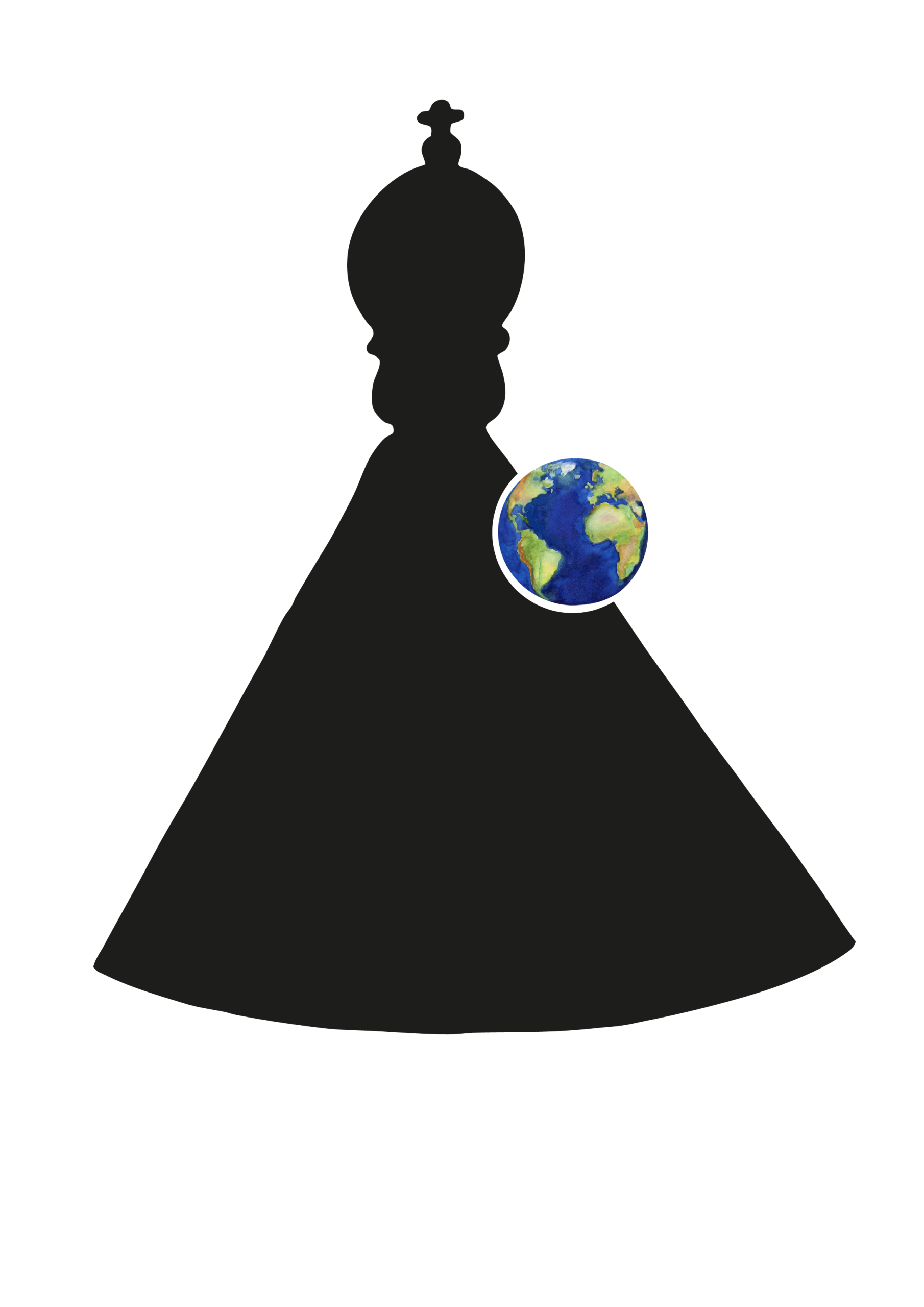
The statue of the Infant Jesus of Prague came to Bohemia from Spain thanks to the noblewoman María Manrique de Lara, wife of Vratislav of Pernštejn. Her daughter, Polyxena of Lobkowicz, donated the statue to the Discalced Carmelites in 1628. With only brief interruptions, the statue has been displayed in this church for almost 400 years. Made of wood, fabric, and wax, it portrays Jesus as a small child about five years old. The childlike image, gentle face, and vulnerability reveal an unusual image of God: tender, fragile, and close. He bears the appearance of a king, yet without overwhelming force or threat — rather with blessing and protection for the whole world. Revealing our weakness and vulnerability can be painful; it exposes our limits. Yet perhaps it is precisely when we recognize our own imperfections that we become capable of compassion toward others.
Can you describe your own fragility in a single word? Let it linger in your mind for a moment. It is part of you. It is simply so.
The Prayer of Joachim and Anne (Petr Brandl, 1716)
Saint Joachim and Saint Anne, the parents of the Virgin Mary, are depicted in Petr Brandl’s painting at prayer, asking God for a child. According to tradition, they long carried the pain of unfulfilled desire and the silence in which no answer came. Yet they did not abandon their plea.\r\n\r\nThe situations in our lives often do not unfold according to our expectations. Hope for a good ending, however, is an active human attitude through which we show that suffering and uncertainty will not overcome us. And with the help of others, finding the courage to hope becomes easier. Perhaps they themselves are messengers of our Creator. “Do not fear, for I am with you; do not be afraid, for I am your God.” Isaiah 41:10
Try to remember someone or something that helped you find hope recently. And perhaps you yourself helped someone else find hope.